AUTOFICTION - Pedro Almodóvar - 2026
IT'S AUTOFICCIÓN
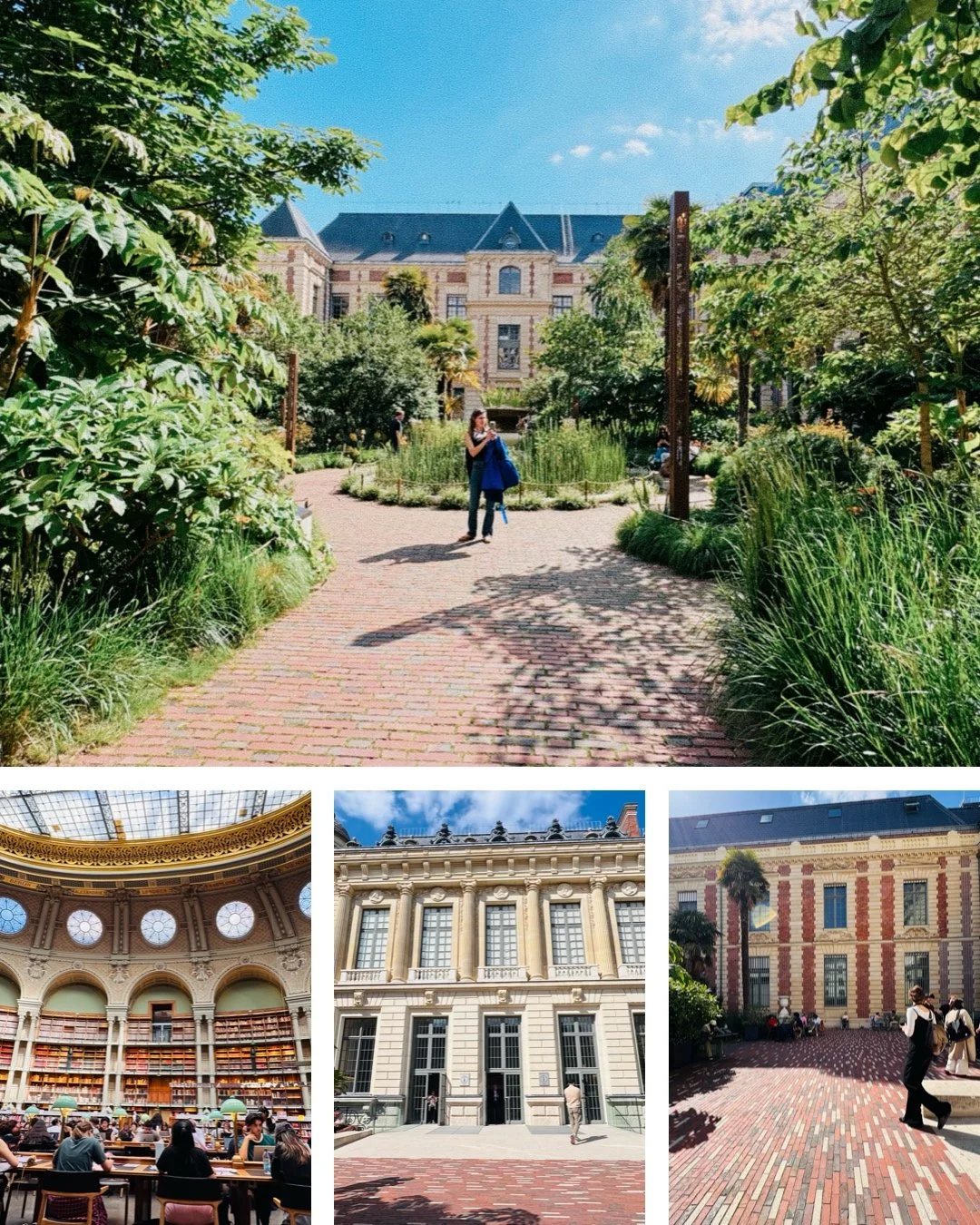
That "shhhh" broke the silence of the room and drew several glances, not of disapproval, but of relief—relief that the "shhhh" wasn't for them. What can we do? Human group performance works like that. I was at table 10, renamed Phillippe GUIBBERT, and she was at 11 (I liked and still like her number better), Dorothe SENEGAL. We stared at each other after that "shhhh." - Should we wait for the third warning until they kick us out or should we go talk at the bar now? - There are looks that are murderous; this one, the look of the girl across from me (What number would she have had?) was the slaughter and the burial. Girl 11, since I don't know her name yet, I'll call her Dorothe - I just don't want to leave here, it's so beautiful - The gaze was still there, it had already pierced at least three layers of my skin. - Wait, I told her. I took one of my notebooks and wrote: “Give me your number and we'll talk on WhatsApp,” she wrote: how daring, here - her number -.
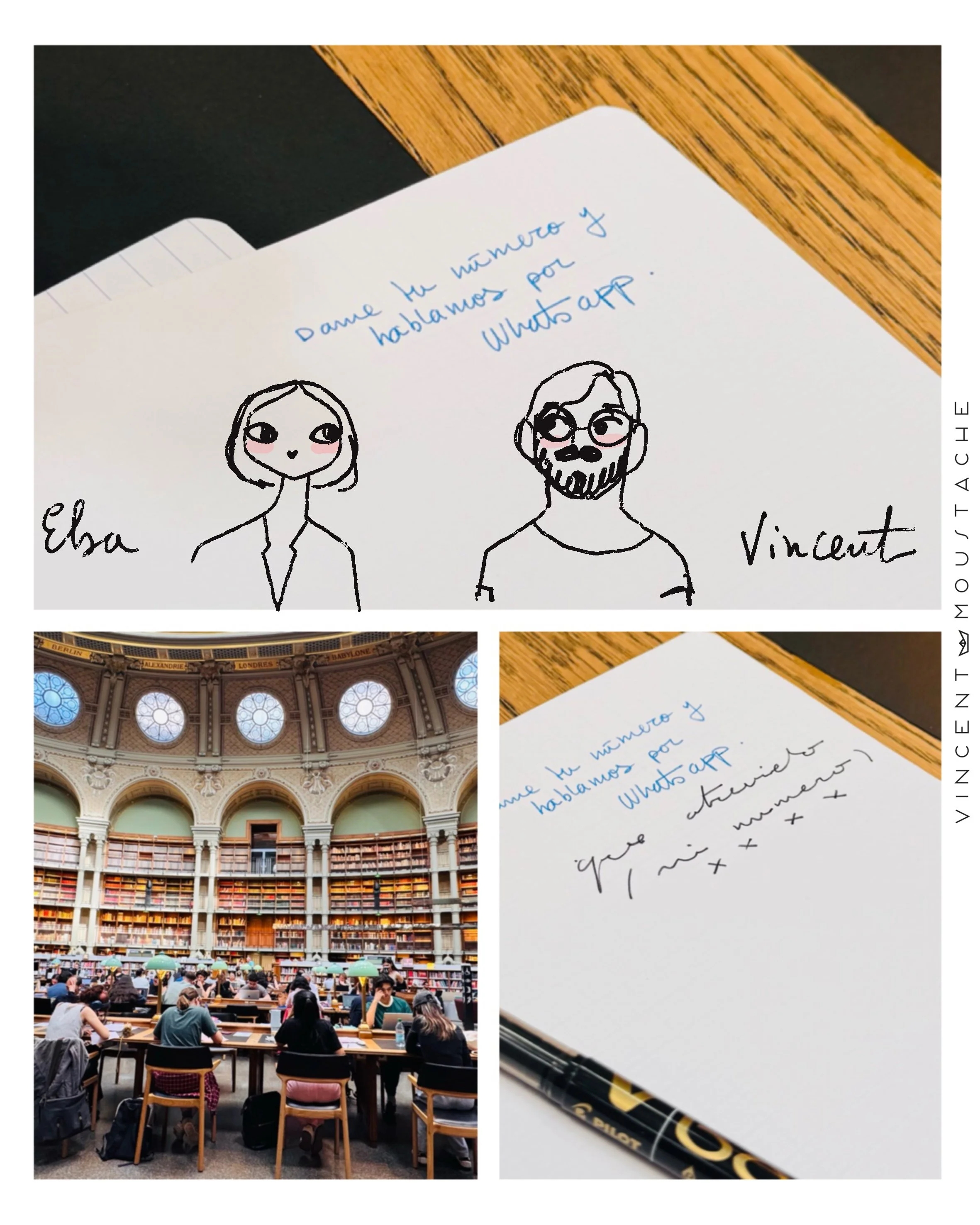
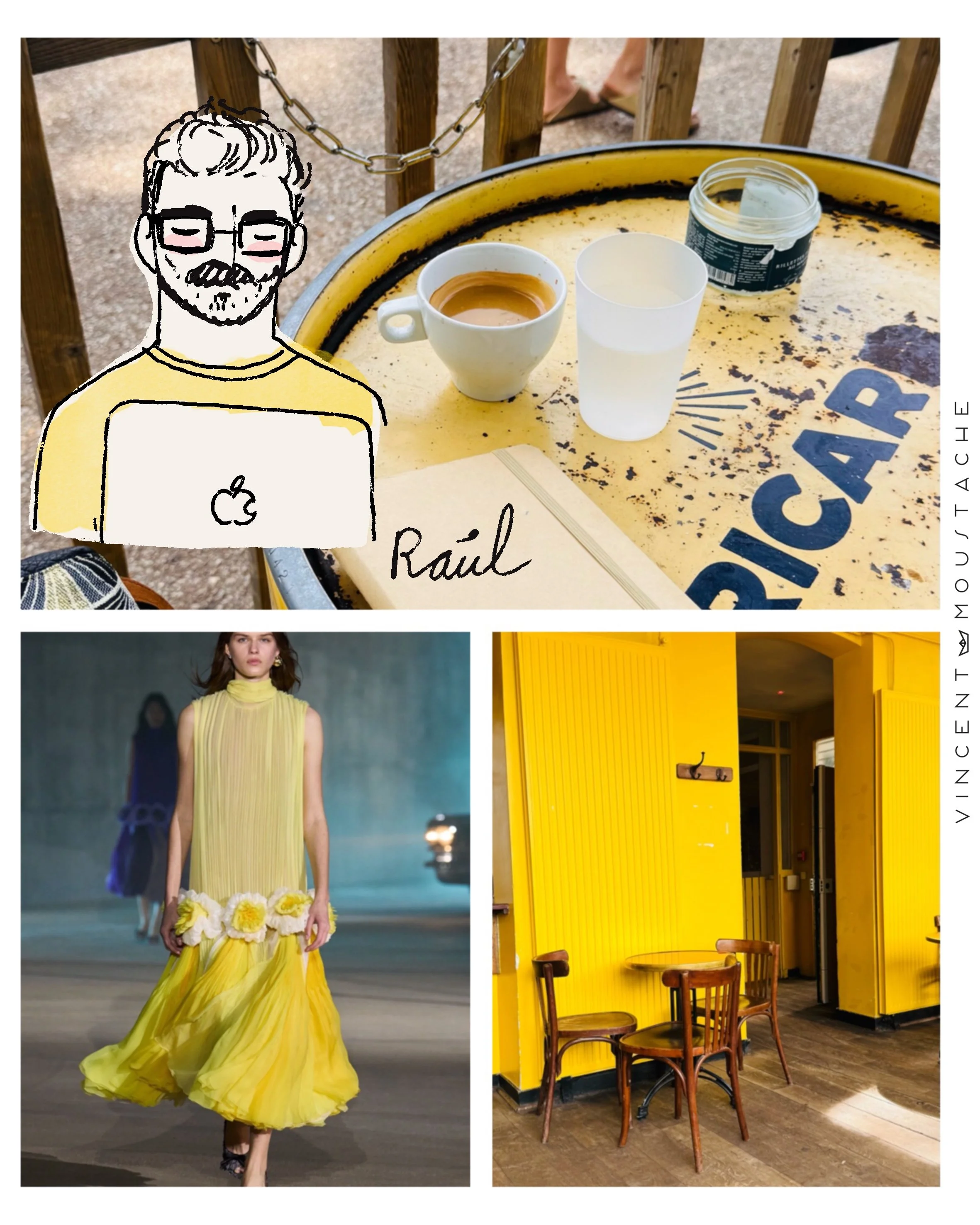
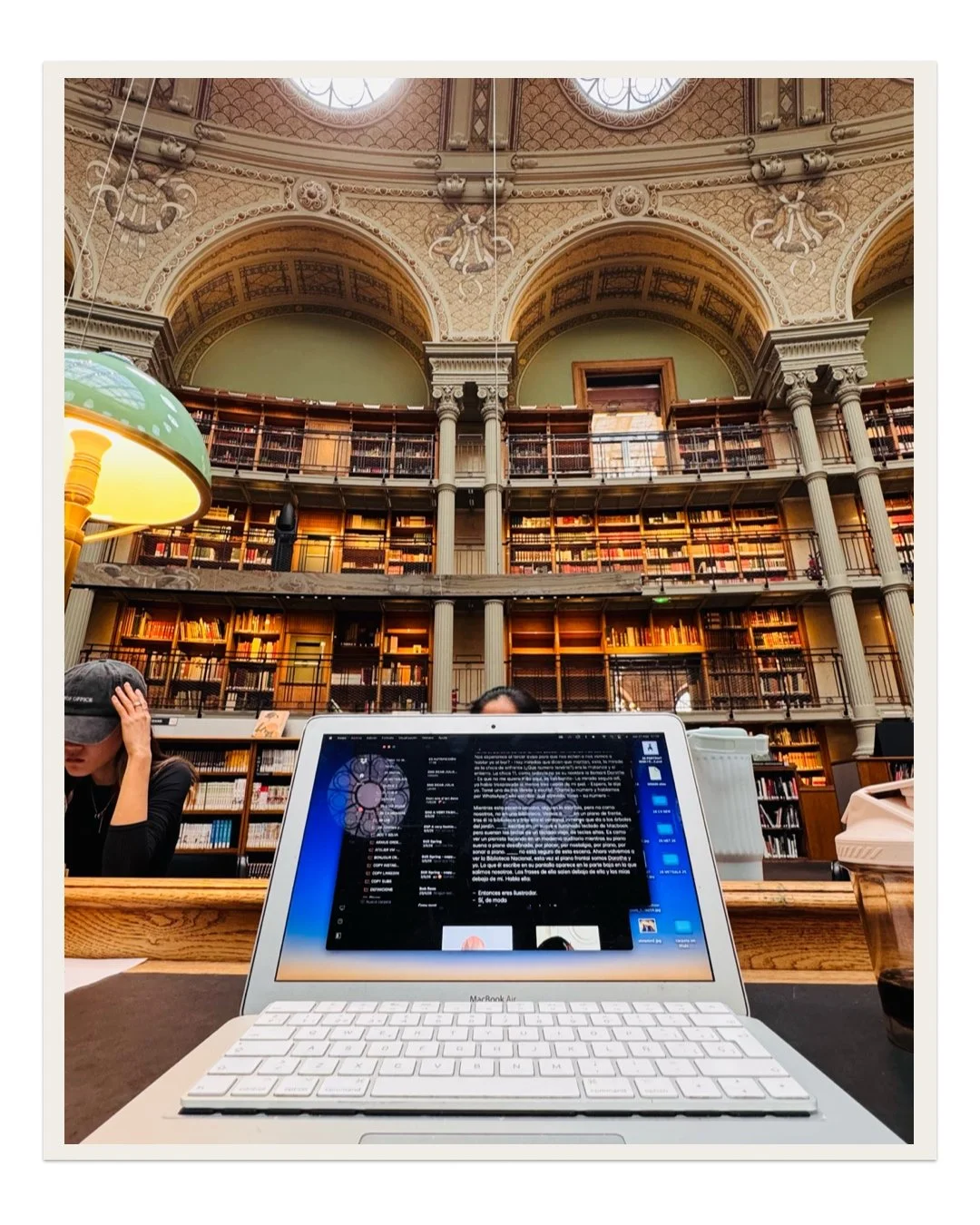
While this scene was happening, someone was writing it, but not like us, not in a library. We see Raúl in a frontal shot, the library behind him and the immense window overlooking the garden trees behind it. Raúl types on a soft, illuminated Macbook keyboard, but the keys of an old, high-key keyboard are heard. It's like watching a pianist playing in a modern auditorium while their piano sounds like an out-of-tune piano—for pleasure, for nostalgia, for piano, for sounding like a piano. Raúl is not sure about this scene. Now we see the National Library again, this time the frontal shot is Dorothe and me. What he writes on his screen appears in the lower part where we are visible. Her sentences appear below her, and mine below me. She speaks:
-So, you're an illustrator.
-Yes, fashion.
-What does that mean, that you're a trend?
-Hahaha, always, no, sometimes. It means I work for the fashion world.
-Hey, that interests me, I'm writing a script and I feel like including animated parts.
-I don't animate, sometimes I do, but I could do the design for everything for you. What is it about? You told me you work in cinema.
-Yes, I made two films a thousand years ago. Now I work in advertising, but I feel like making another one.
-And what is it about?
-I don't know yet, about me, about the people I know.
-Sounds good.
-I started writing about a friend, but she got angry.
-She doesn't like the movies you make?
-If she's in it, I guess not.
-A lot of people would love to be in a movie, me for example. My drawings have been in one, but not me.
-What have you done?
-I made a notebook for a writer, I drew as if I were him, I imitated his handwriting. When the job was done, I didn't draw or write like before anymore; now I have strokes that are his.
-I love this story, can I use it?
-Of course, I do the same when I write. But be quick, if I publish it first I'll say you stole it, hahaha.
-That sounds fine to me.
-Hahahah.
-By the way, my name is Elsa.
-I'm Vincent.
-Nice to meet you.
-Enchantée.
Elsa looks at the screen. There's something that, I don't know.
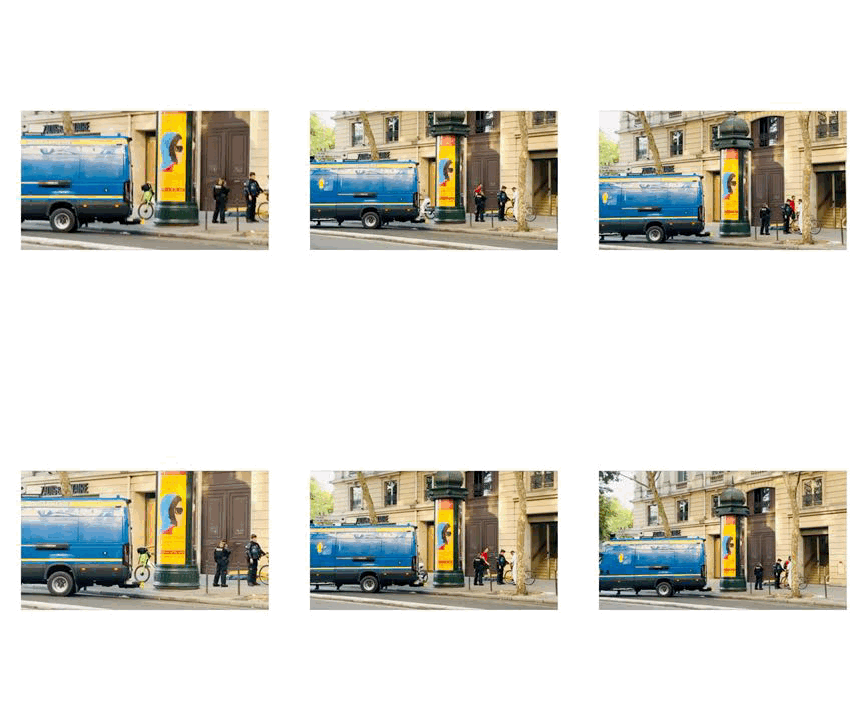
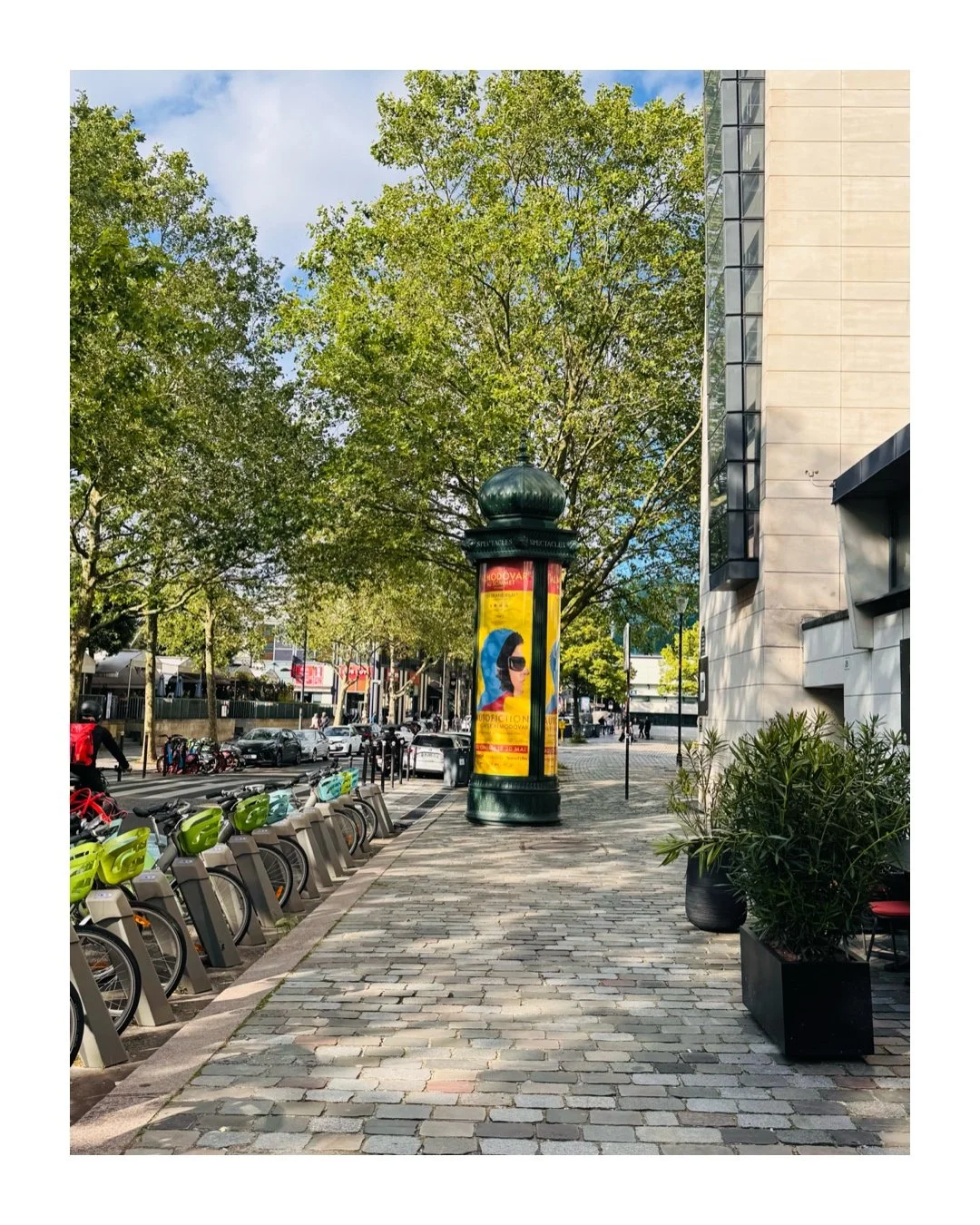
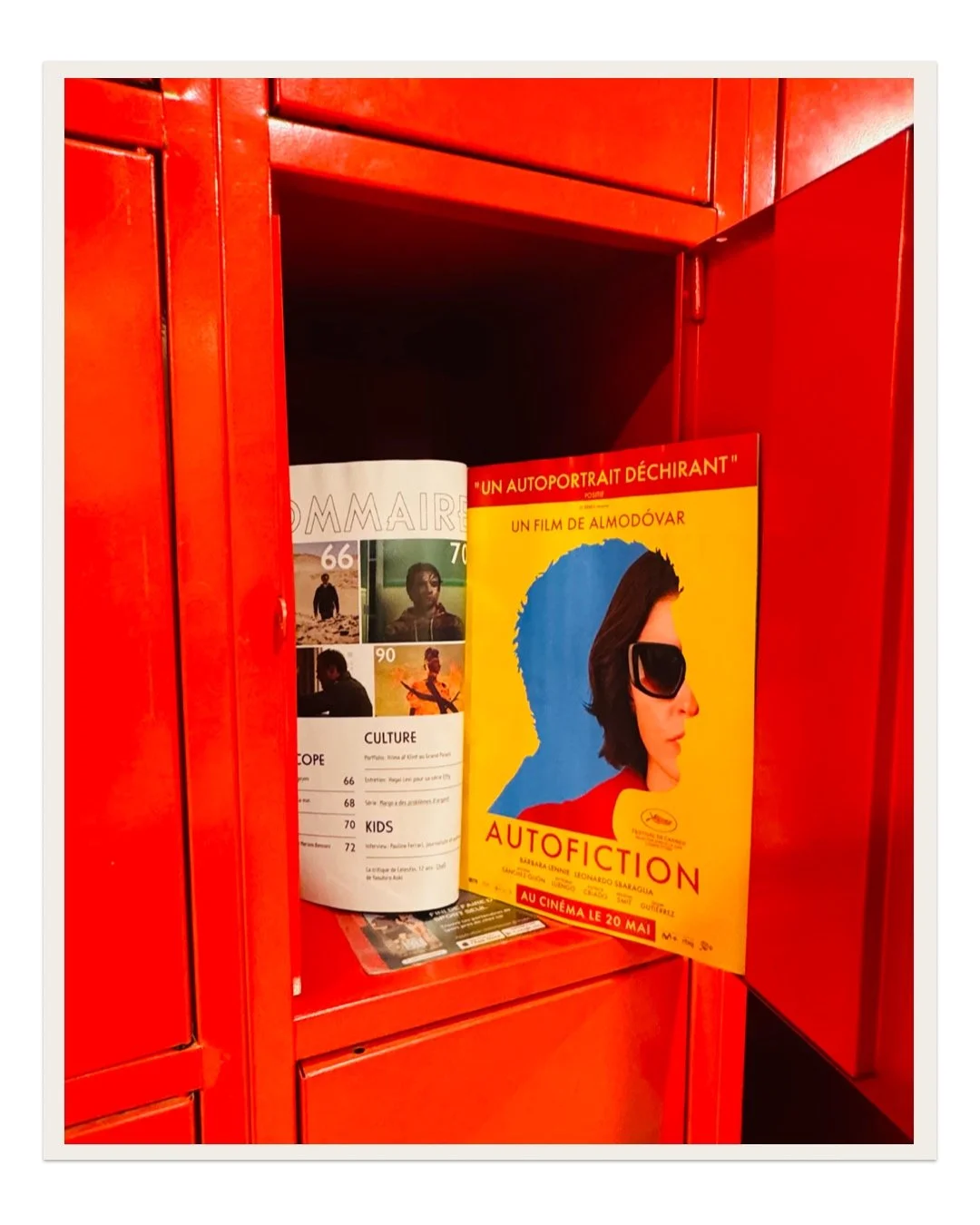
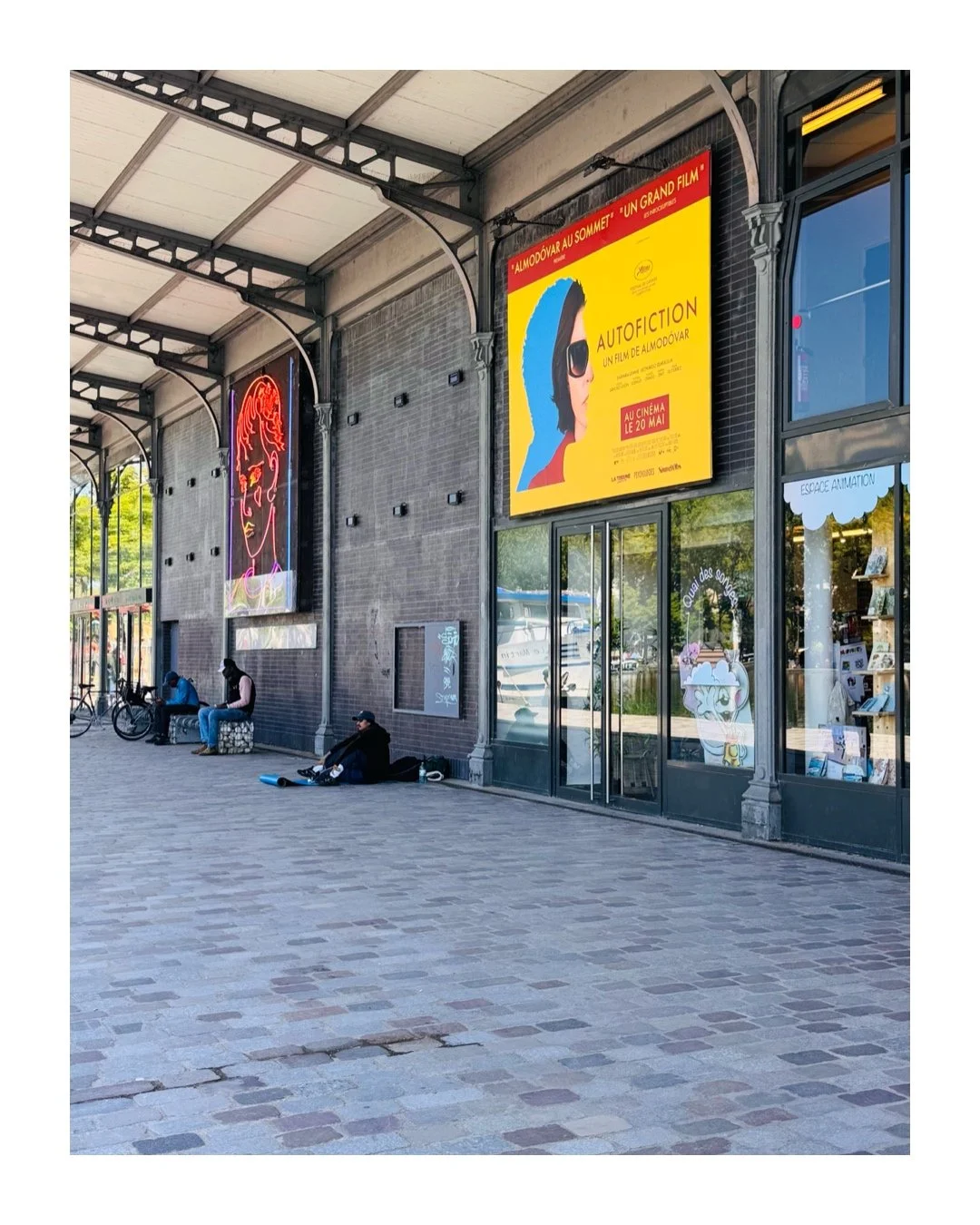
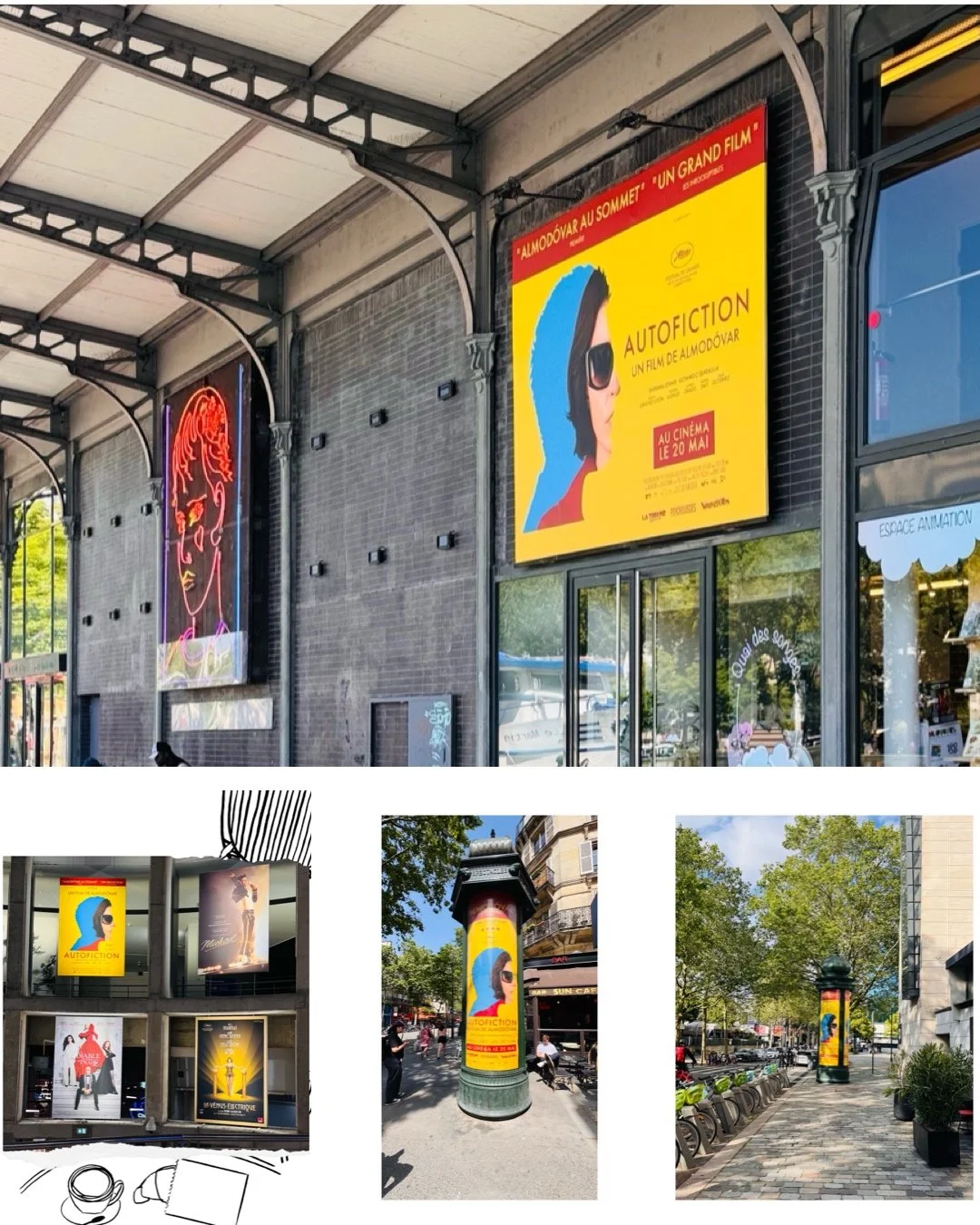
HERE THE MOVIE BEGINS
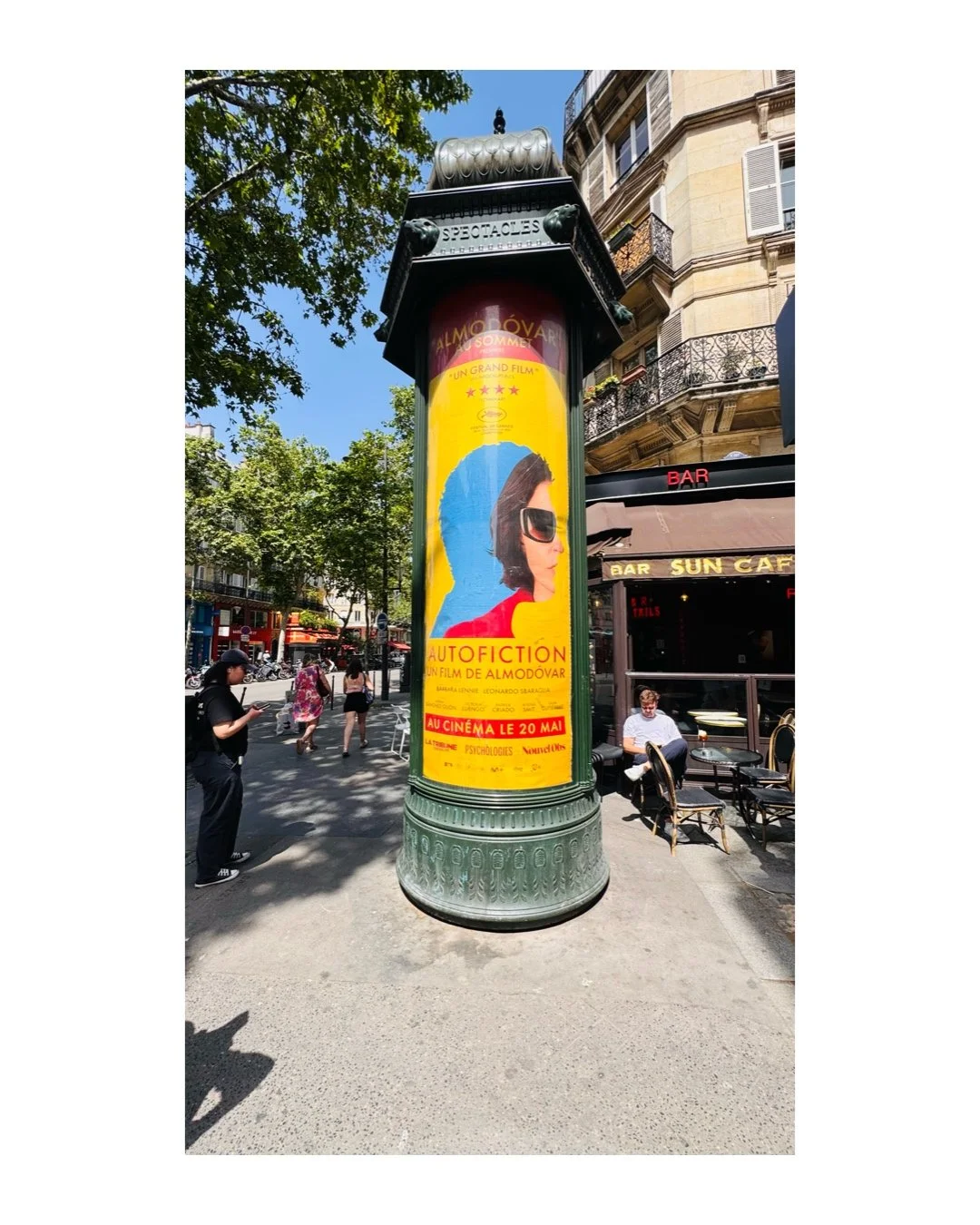
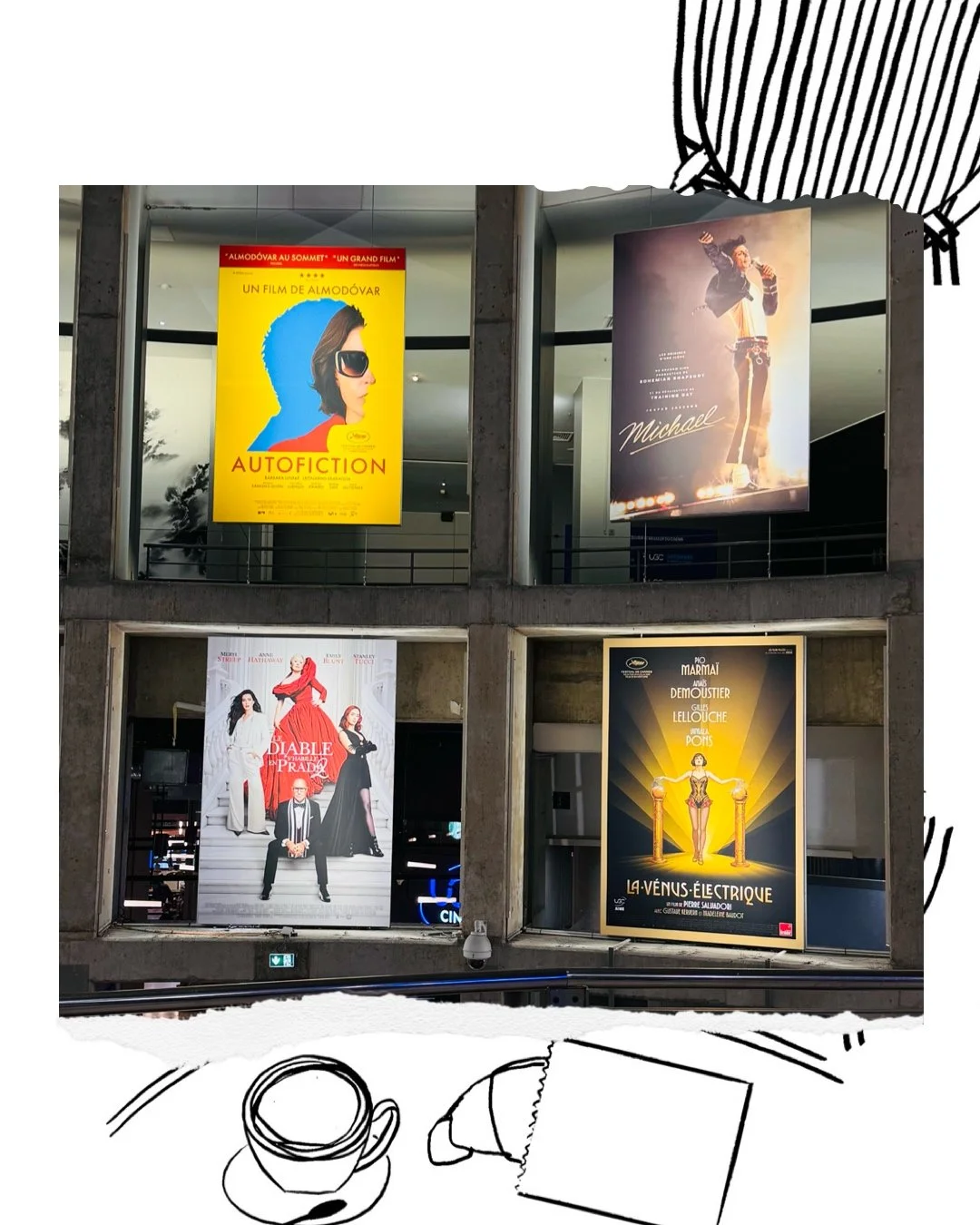
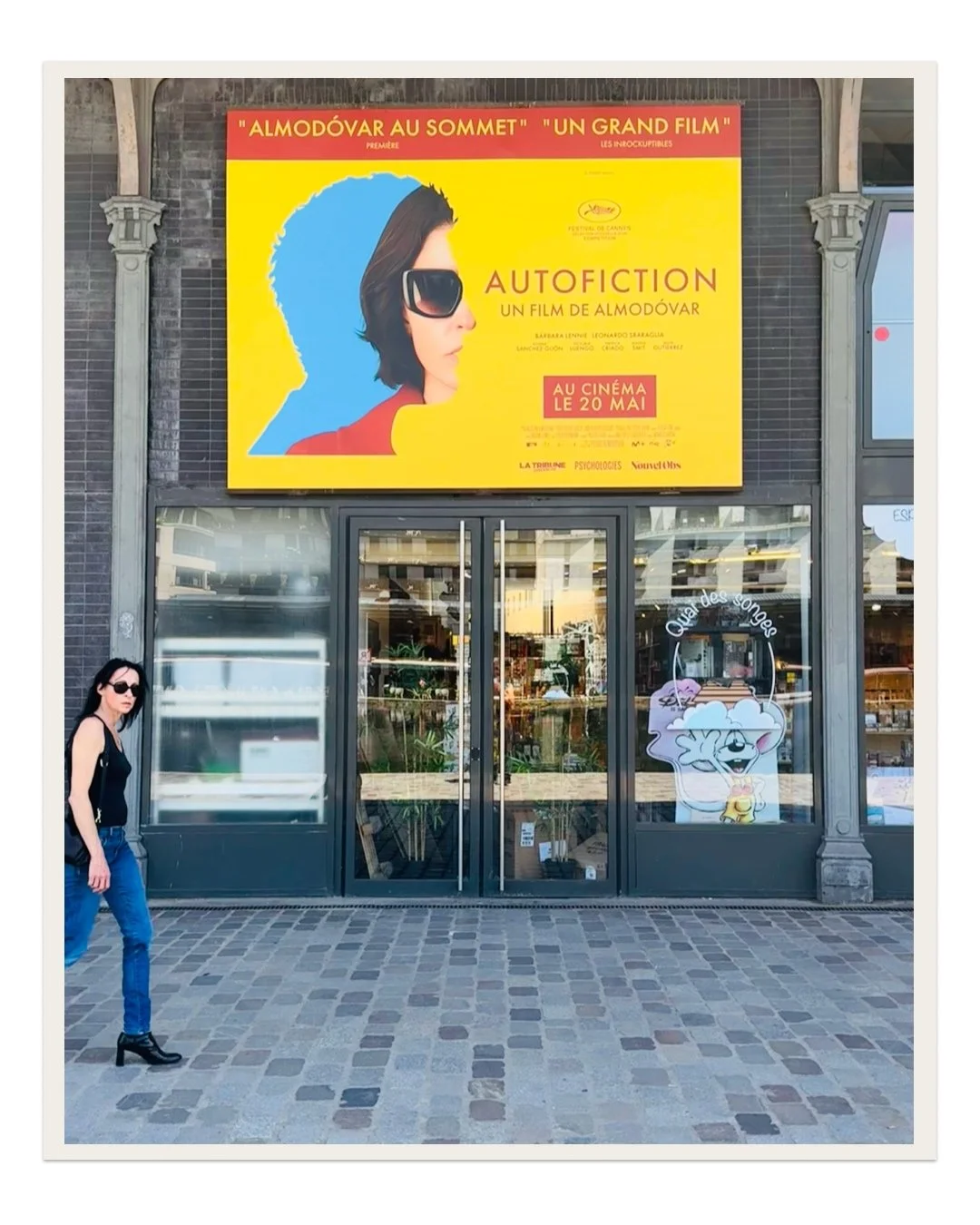
Here the movie begins, not the one I just told you about, but the one that premiered in France yesterday, May 20th, called Autofiction in France and “Amarga navidad” (Bitter Christmas) in Spain. When it premiered in Spain, I was living in Madrid, and I confess, Pedro, I was lazy about seeing it because of the title; my Christmases are already bitter enough. In mid-April, I moved back to Paris, with more desire to live than possibilities of doing so, and a week ago I resubscribed to the UGC Illimitée card. Pedro, that card is the best thing France has; you can see all the movies you want for €24 a month. You can watch two or three in a row, re-watch, as I did with Autoficción, the same movie as many times as you want.
NARRATING ONLY WITH COLOUR
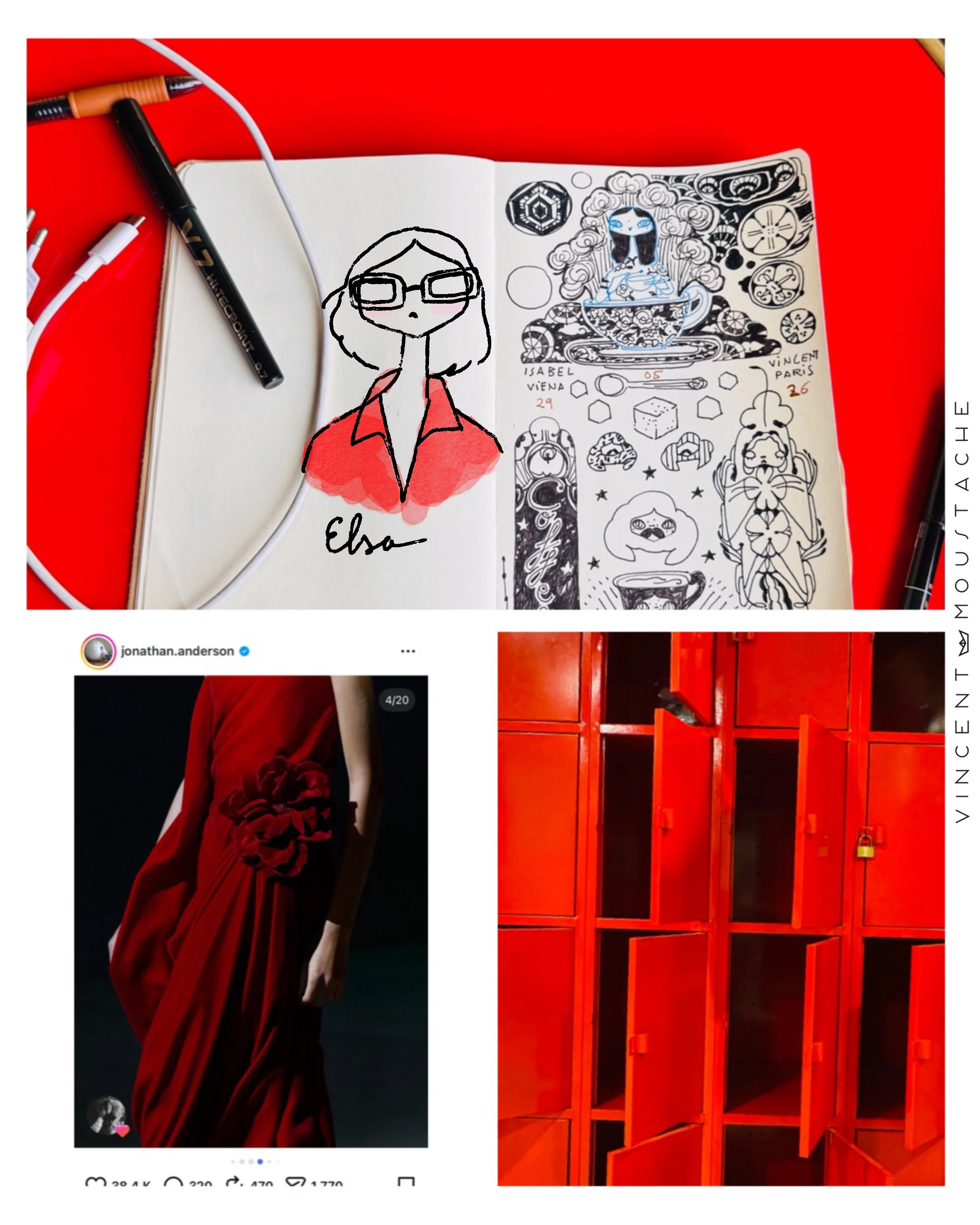
Something that represents Pedro Almodóvar's cinema, even without being one of his actual works, is the use of color. The intense and selective use of red, with complementaries, with associates, driving the drama, is also his signature and, consequently, that of Spanish cinema.
Red is passion, and his actresses always wear it. In this case, the character of Elsa (Bárbara Lenin) hardly takes it off throughout the film except for two or three moments. The complementary color to red—what red lacks—is green, and in the first part, Patricia (Vicky Luengo) wears it, also playing the antagonist. The moment Elsa attacks Patricia, they exchange roles and colors. Patricia leaves the island clean, in a white coat, a chrysalis, and a multicolored striped bag, wings, a butterfly. She still doesn't know who she really is. It's no coincidence that the child, when saying goodbye to Elsa, wears a red shirt and a green backpack. The child will carry that green of his mother, of his parents, on his back. Lanzarote functions as an aesthetic neutralizer: it is a black island with very white houses, including the floor. It is a volcanic island, fire—extinguished passion. It's not ash; it's lava. The waves cool it down just as Elsa cools herself down. Then she can write again.
Yellow, the storm, model Natalia (Milena Smit) upon arriving at the island. Dark red, intense, for Mónica (Aitana Sanchez-Jijón). Golden yellow for Raul with those Prada polo shirts. The prize, the gold, the fame, the cinema. The green park at the end, apple, so calmly relaxing, healthy, and wild at the same time. Aren't poison and medicine the same, only depending on the quantity used?