EXPO : Hilma af Klint . Paintings for the Temple
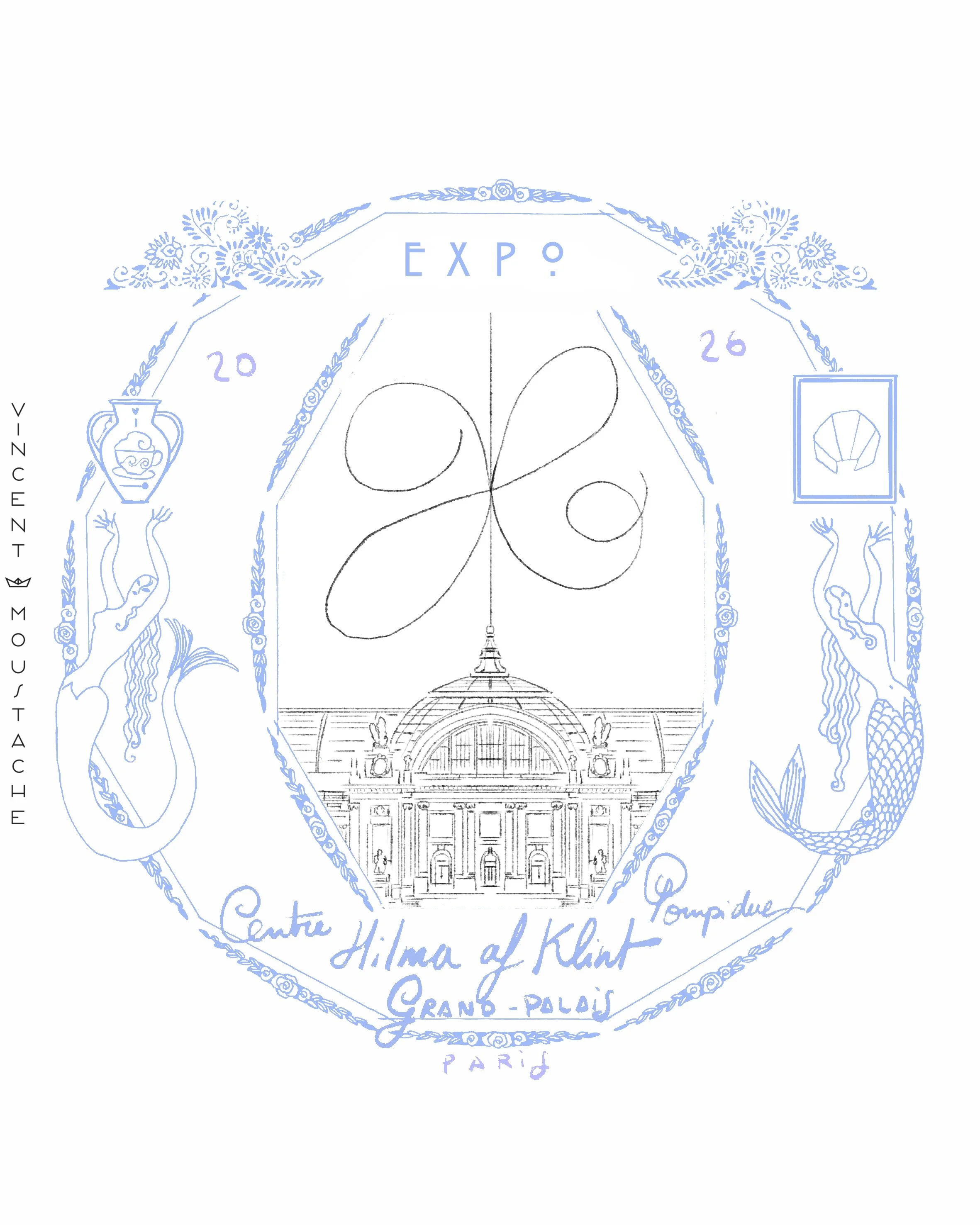
“Hilma af Klint . Paintings for the Temple (1906–1915)”
193 monumental paintings created to inhabit a spiral temple.
Who Was Hilma af Klint?
* Pioneer of Abstraction: Swedish artist (1862–1944) who began creating radically abstract artwork in 1906—years before Kandinsky, Malevich, or Mondrian.
* Double Life: Formally trained at Stockholm’s Royal Academy, she publicly sold traditional landscapes and portraits while secretly creating vision-driven abstract works in private.
* Spiritual Roots: Deeply involved in spiritualism, theosophy, and botany, she believed high spiritual guides directed her hand.
* Hidden Legacy: Convinced the world was not ready for her art, she stipulated in her will that her abstract collection remain hidden until 20 years after her death. Her work remained largely unknown until the late 20th century.
The Exhibition: Paintings for the Temple (1906–1915)
(Grand Palais, Paris, co-produced with Centre Pompidou)
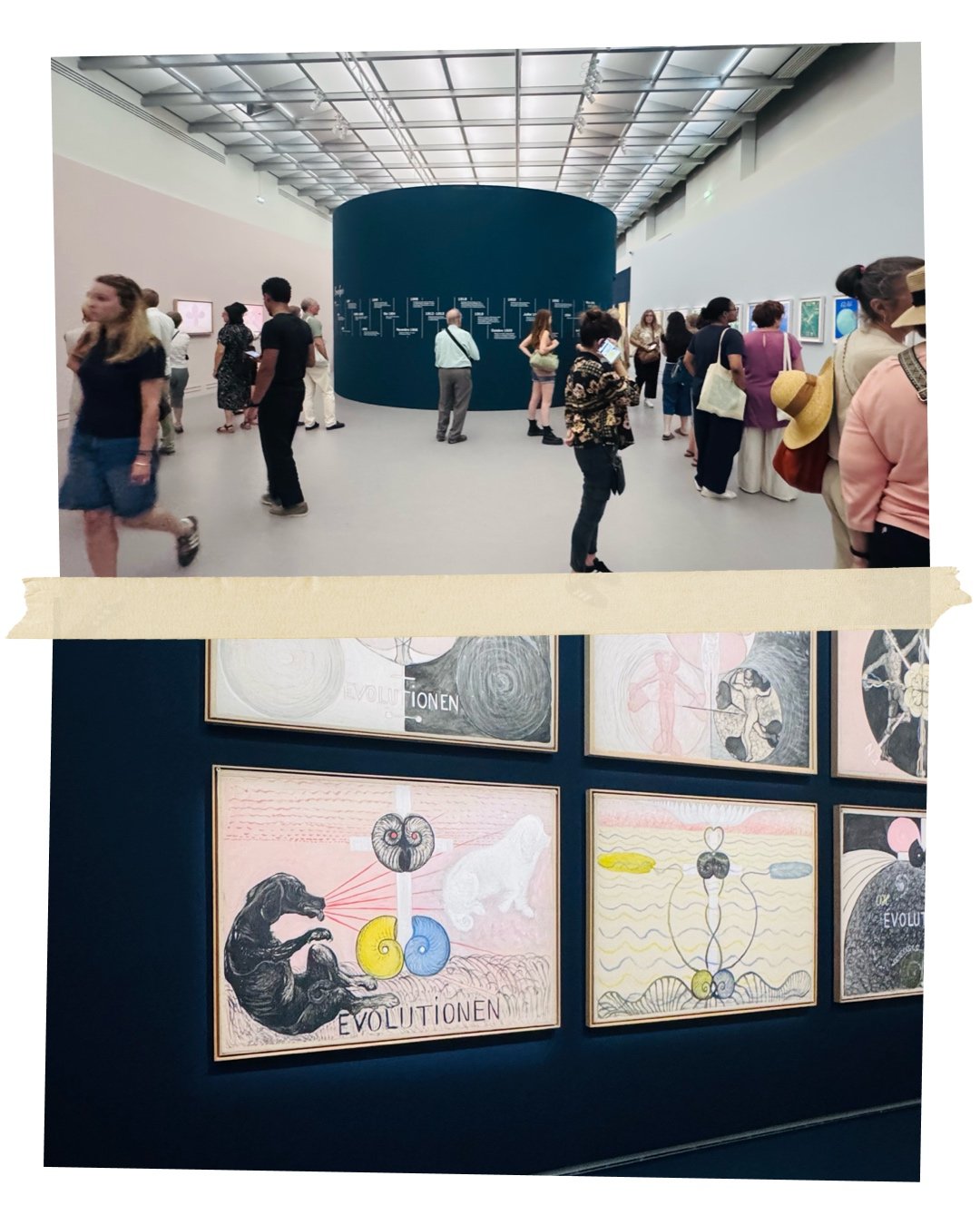
The exhibition focuses on her central masterpiece: 193 monumental paintings created to inhabit a spiral temple.
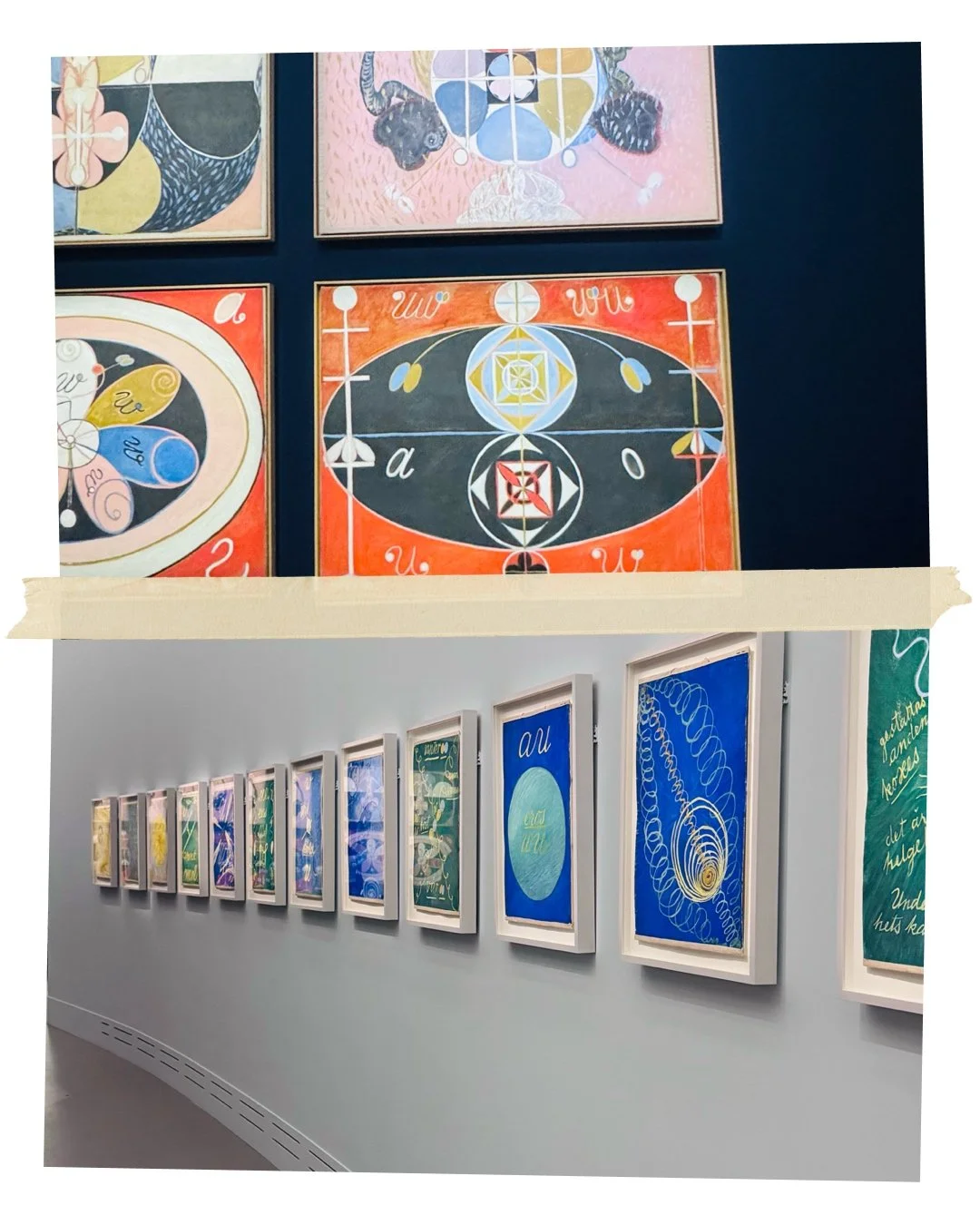
1. The Early Spiritual Research & The Five (De Fem): Explores her séances, automatic drawing, and spiritual gathering group that paved the way for her abstract breakthrough.
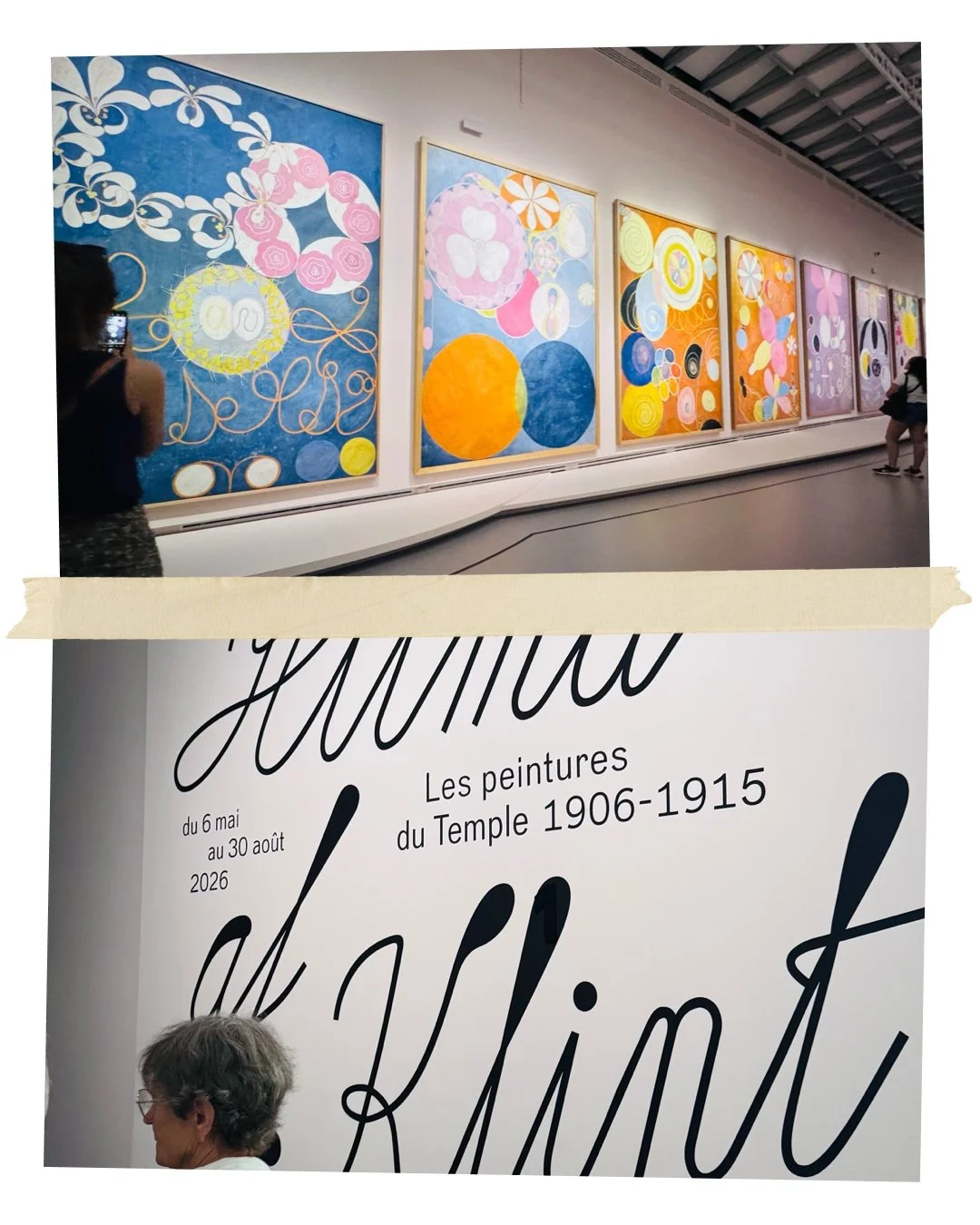
2. "The Ten Largest" (De Tio Största): A centerpiece room housing massive, vibrant canvases measuring over 10 feet tall, depicting the stages of human life (Childhood, Youth, Adulthood, Old Age).
3. Organic & Geometric Series: Works exploring dualities (male/female, light/darkness, spirit/matter) through spirals, circles, and botanical symbolism.
4. The Altarpieces (Altartavlor): The climax of the series—radiant geometric compositions representing unity and ascension toward cosmic consciousness.
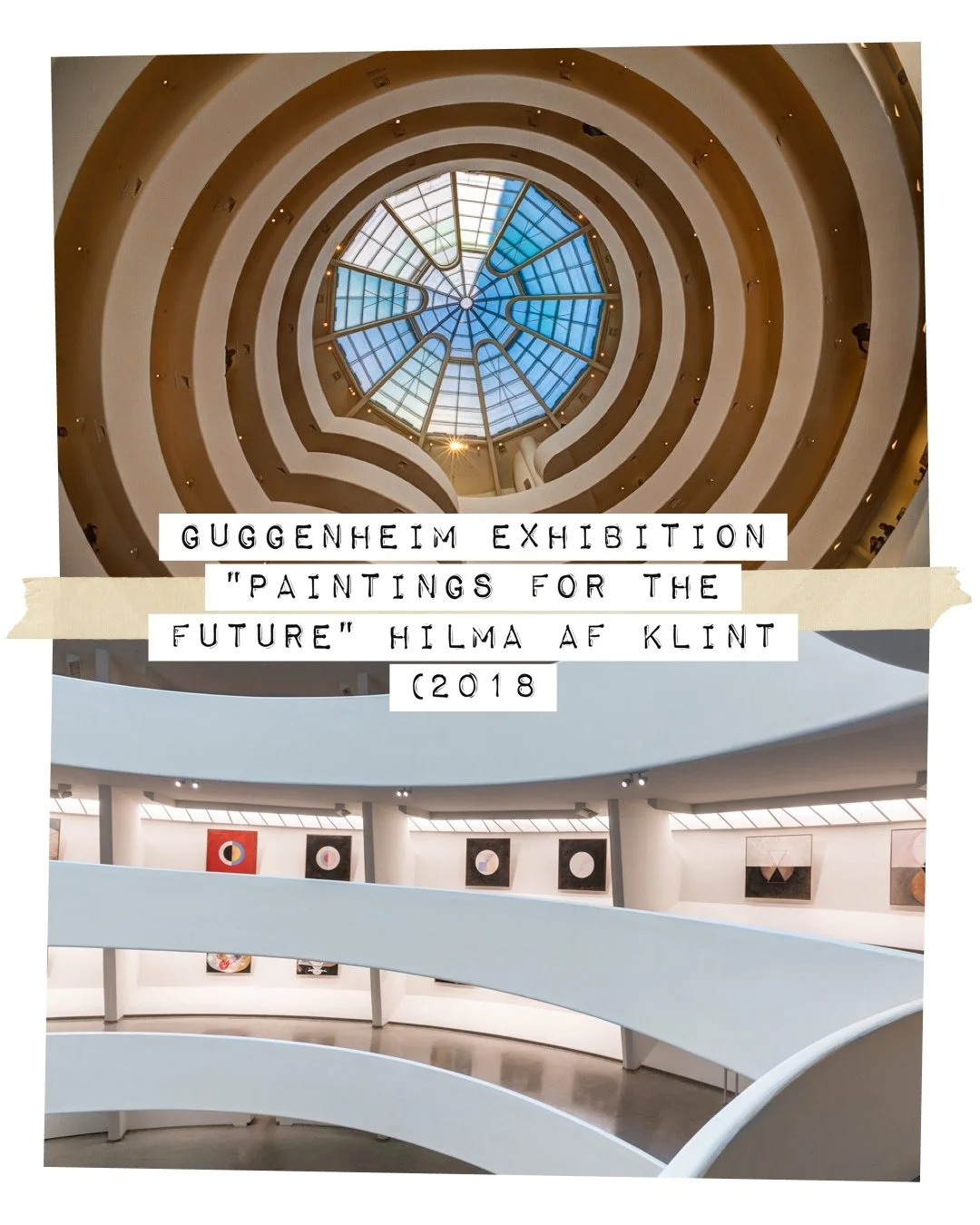
I first discovered her work at the Solomon R. Guggenheim Museum in New York.
* Her Vision: Early in her spiritual practice, Hilma dreamed of a physical and metaphysical spiral temple—a multi-level circular building designed for visitors to walk upward along a spiraling path to experience her series in a journey toward spiritual enlightenment. She never managed to build it during her lifetime.
* Realized in 2018: Her vision came alive in 2018 during the landmark Guggenheim exhibition Paintings for the Future. Frank Lloyd Wright’s iconic spiral rotunda served as the exact physical counterpart to her imaginary temple, fulfilling her century-old dream as visitors walked up the winding ramp to view her art.