FLAPPERS & PHILOSOPHERS . TREASURE ISLAND

FINDING A MAP
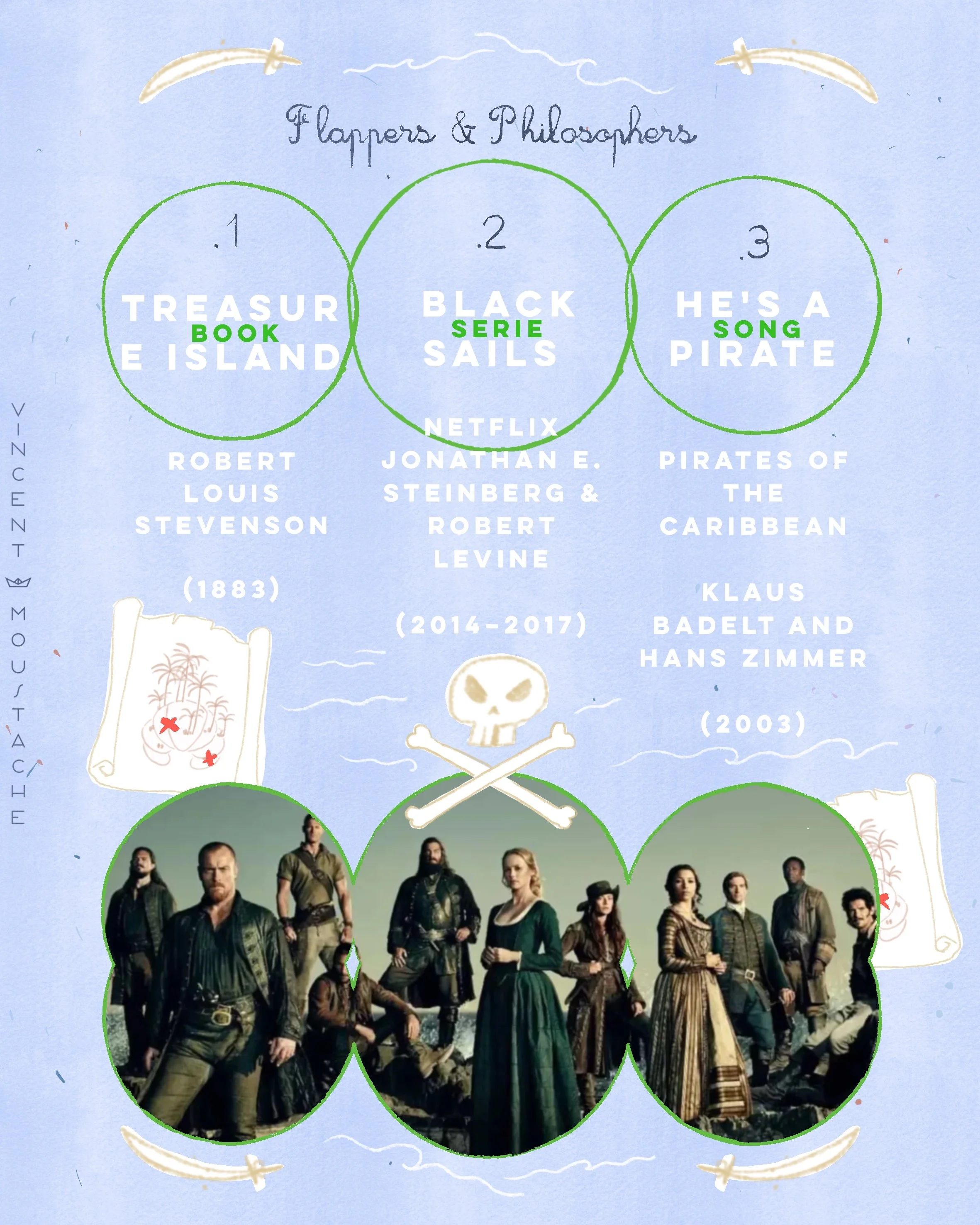
Many, many—possibly most—stories written and filmed start with a character finding a document: a book, a letter, a photo, a video, or a map, and that is the spark of the story. Usually, they are secrets: A family secret? UFO photos? Classified reports? The treasure map? Whatever it is, the document itself is the conflict in the narrative. As a great example of this "Document Starter" subgenre, we have "Treasure Island" . Robert Louis Stevenson (1883), in which the main characters go crazy chasing the treasure map and the dream of becoming rich. In the pirate narrative genre, the treasure map is everything. Let's imagine for a moment the sea—vast, immense, with no locations on its own—a map is everything.
_
BOOK
"Treasure Island" . Robert Louis Stevenson (1883)
_
VIDEOGAME
Monkey Island
* The Secret of Monkey Island: Ron Gilbert, Tim Schafer, and Dave Grossman (1990)
* Monkey Island 2: LeChuck's Revenge: Ron Gilbert, Tim Schafer, and Dave Grossman (1991)
* The Curse of Monkey Island: Jonathan Ackley and Larry Ahern (1997)
* Escape from Monkey Island: Sean Clark and Michael Stemmle (2000)
* Tales from Monkey Island: Dave Grossman and Michael Stemmle (2009)
* Return to Monkey Island: Ron Gilbert and Dave Grossman (2022)
(They also feature remastered versions: The Secret of Monkey Island: Special Edition from 2009 and Monkey Island 2: Special Edition from 2010).
_
MOVIE
Pirates of the Caribbean
The Curse of the Black Pearl: Gore Verbinski (2003)
Dead Man's Chest: Gore Verbinski (2006)
At World's End: Gore Verbinski (2007)
On Stranger Tides: Rob Marshall (2011)
Dead Men Tell No Tales: Joachim Rønning and Espen Sandberg (2017)
SOUNDTRACK
"He's a Pirate": Klaus Badelt and Hans Zimmer (2003)
_
SERIES
Black Sails, Jonathan E. Steinberg & Robert Levine (2014–2017) Black Sails Original Television
Soundtrack, Bear McCreary (2014)
_
The Lost Pirate Kingdom . Netflix . Stan Griffin and Justin Pollard (2021)
Soundtrack, Mark Russell (2021)
THE ONE PIECE
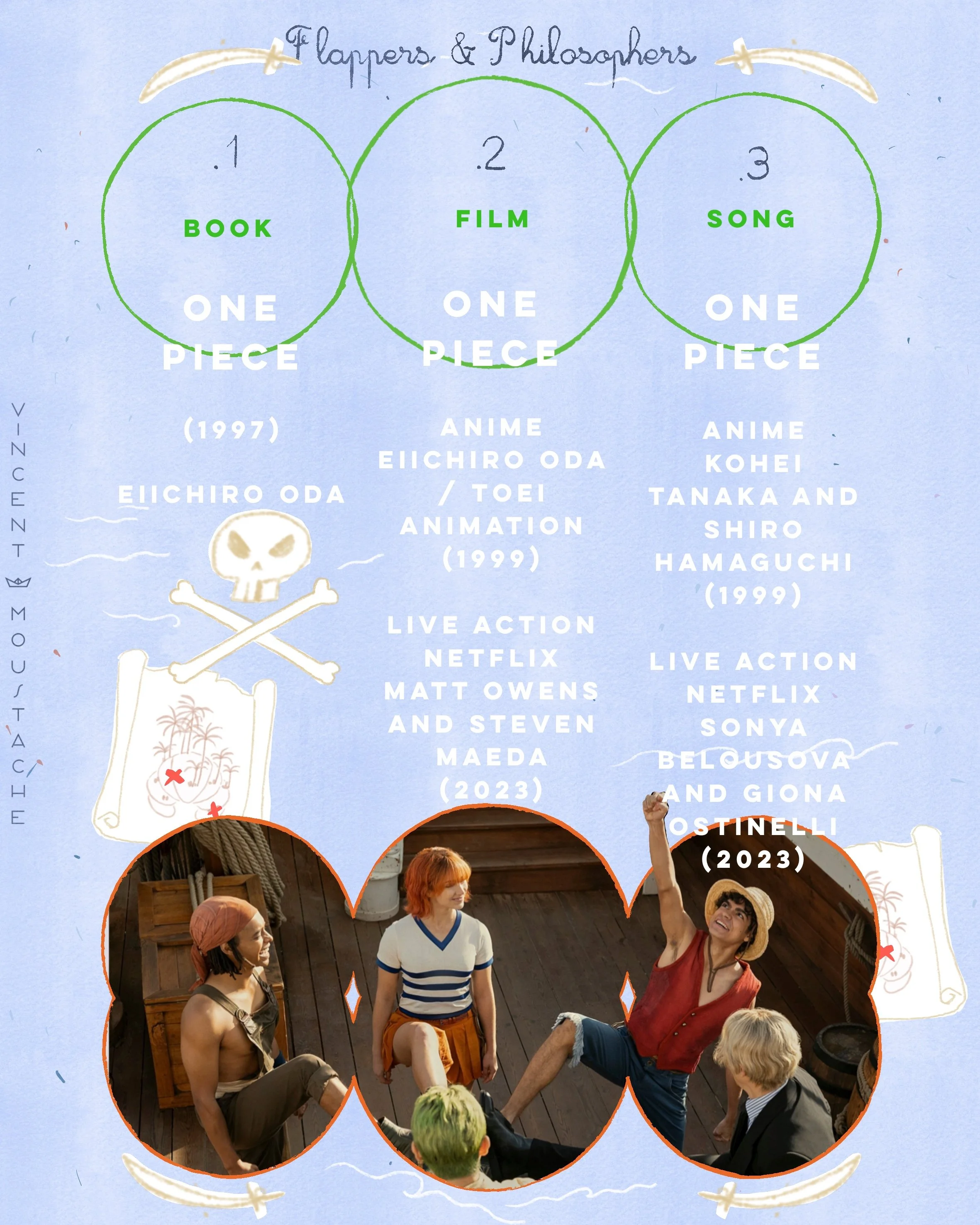
A huge success and direct heir to "Treasure Island", the One Piece phenomenon arrives! Originally a 90s manga and later an anime, it is now a highly successful live-action series on Netflix. The story takes place in a world that is literally a sea of pirates, and its maps—obviously imaginary—are seas and oceans. The main story revolves around the protagonist Monkey D. Luffy and his dream of becoming the greatest pirate in the world by finding the hidden treasure of the pirate Gol D. Roger, the One Piece, and to do so, he recruits other dreamers like himself as his crew.
THE ONE PIECE WORLD MAP
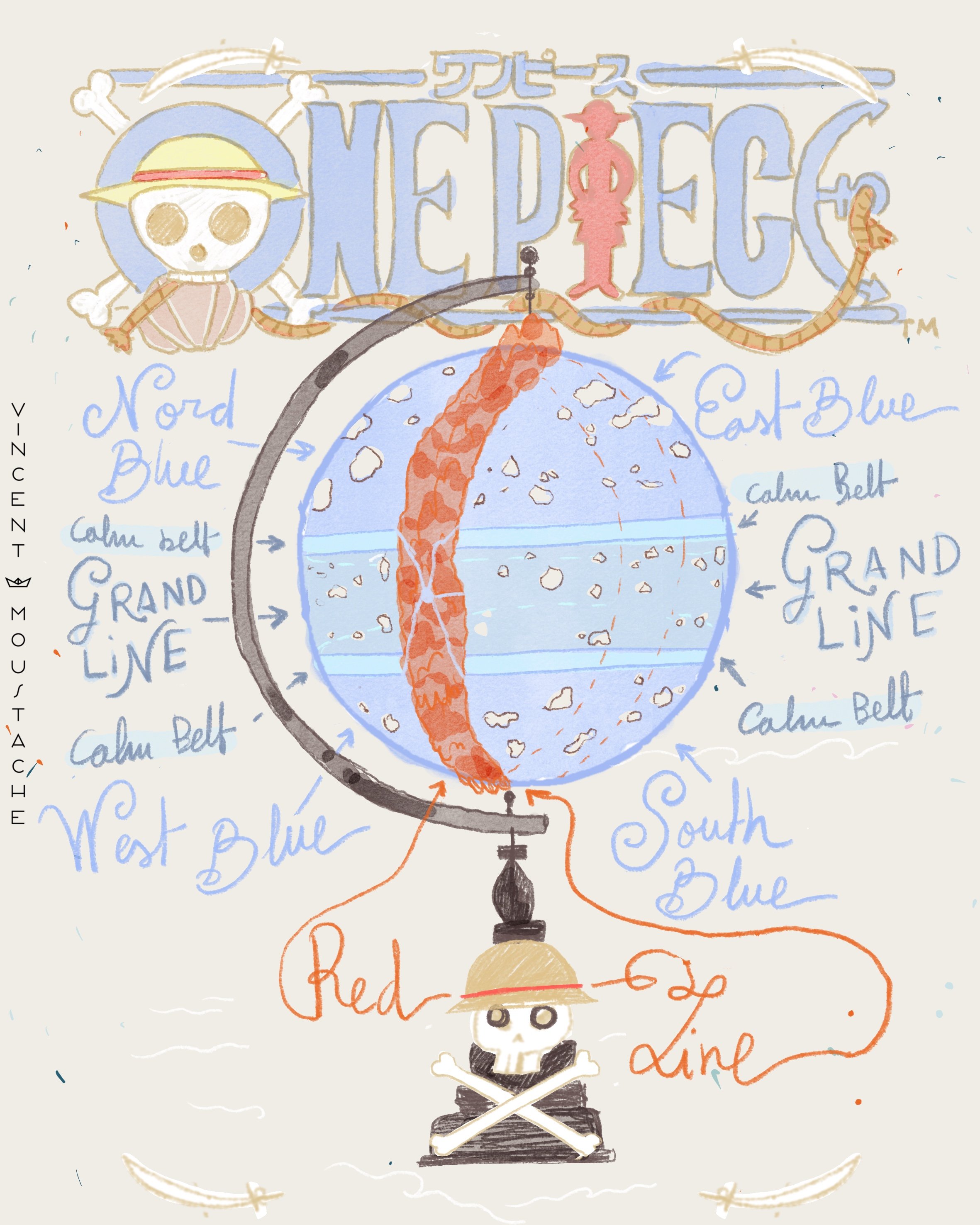
The world of One Piece is a globe split by two axes: the Red Line, a continent-like chain of rocky mountains that divides the world, and the Grand Line, an oceanic strip serving as an equator full of islands and countries. The Grand Line is bordered by a Calm Belt on each side, which are strips of water where there is no wind and ships come to a standstill. The rest of the world is then divided into 4 seas: North Blue, East Blue, West Blue, and South Blue. All these geographical features of the world act as the direct catalyst and driving force behind the entire story.
THE SUCCESS OF PURSUING A DREAM
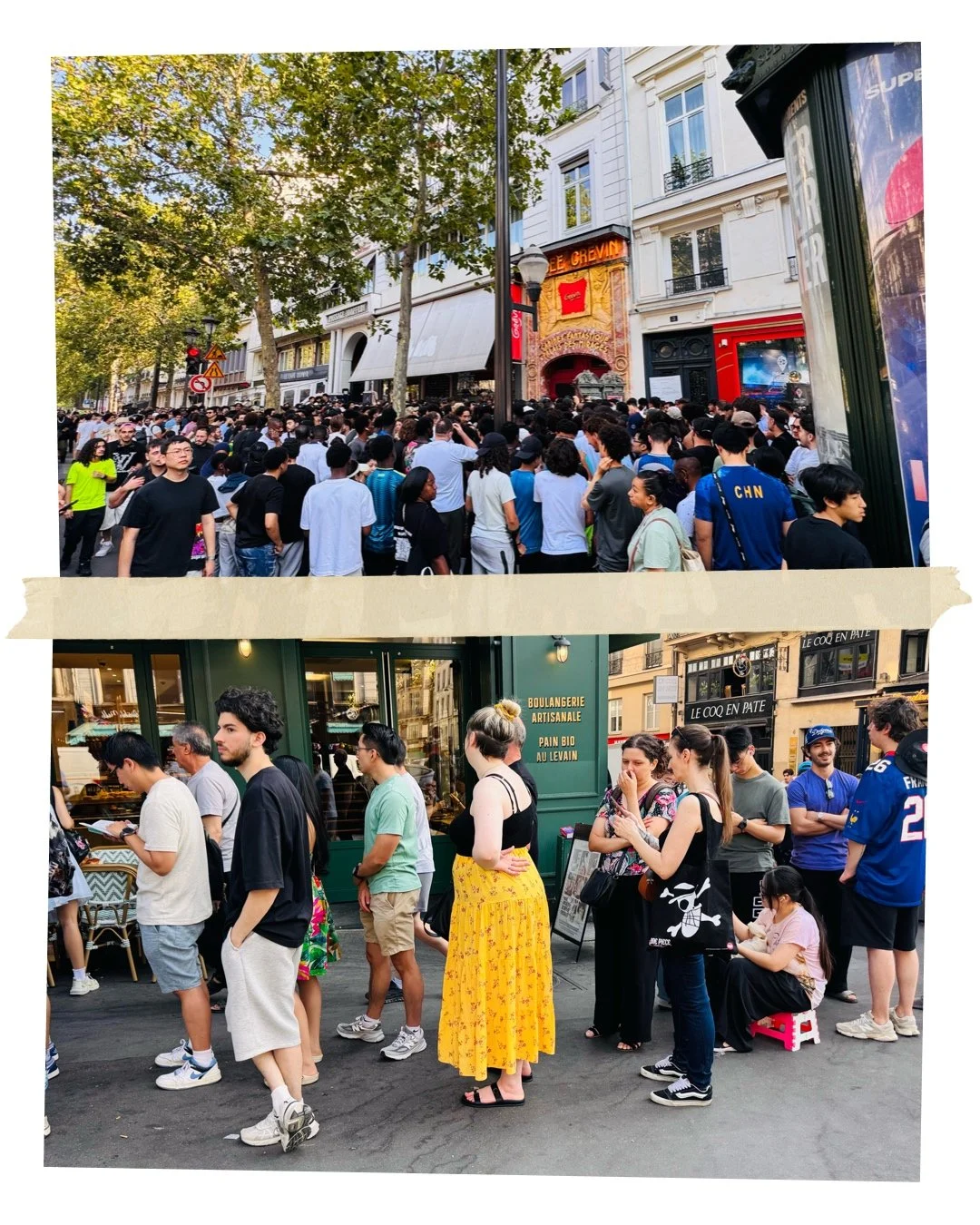
The plot of One Piece is highly contagious, to the point that it has created a worldwide fan phenomenon. I recently witnessed this when thousands upon thousands of fans of the series tried to get a special edition ticket for the series at the Musée Grévin in Paris. As a promotion for its new One Piece installation, the museum was offering 50,000 special edition One Piece Magic cards. The success was so massive and the queue so out of control that the giveaway was suspended, creating yet another myth and another treasure in the process.